Researchers Reveal Key Role of Atmospheric Transport in Formation of Particulate-Bound Mercury
Atmospheric particulate-bound mercury (PBM), adsorbed onto atmospheric particles like TSP and PM2.5 (denoted as PBMTSP and PBM2.5), plays a crucial role in the global mercury biogeochemical cycle. PBM is easily deposited into water and soil, posing potential environmental and health risks to organisms and ecosystems. However, the mechanisms governing its formation and transport remain unclear.
A research team led by Prof. GUO Qingjun from the Institute of Geographic Sciences and Natural Resources Research of the Chinese Academy of Sciences has utilized mercury stable isotopes to uncover the previously underestimated critical role of atmospheric transport in PBM formation.
Their findings indicate that atmospheric transport contributes 27.2%–70.1% and 10.8%–33.1% to the formation of PBM2.5 and PBMTSP, respectively. Notably, this influence is significant not only in remote areas but also in regions dominated by anthropogenic activities. Furthermore, the contribution of atmospheric transport to PBM formation may be particularly underestimated during clean days.
These results provide new insights into the mechanisms of PBM formation and transport, contributing to a deeper understanding of atmospheric mercury cycling. This work was published in Geophysical Research Letters.
Conventional understanding often attributes PBM formation primarily to local anthropogenic emissions. Under the guidance of Prof. GUO Qingjun, doctoral graduate QIN Xuechao found that PBM2.5 exhibits significantly higher mass-independent fractionation (MIF) signatures (Δ199Hg) compared to PBMTSP, with an average enrichment of 0.25‰. This isotopic evidence suggests that fine particulate mercury undergoes more intense photochemical reactions, such as photoreduction, during long-distance and high-altitude atmospheric transport.
The researchers propose that anthropogenically emitted mercury adsorbs onto particulate matter, with fine PBM being more prone to long-range transport at higher altitudes. During transport, photochemical reactions induced by sunlight and ozone lead to positive MIF shifts in fine PBM. In contrast, coarse PBM undergoes weaker photoreduction due to shorter transport distances.
This study highlights that atmospheric transport is a major source of regional PBM, a factor that current atmospheric mercury models may underestimate.
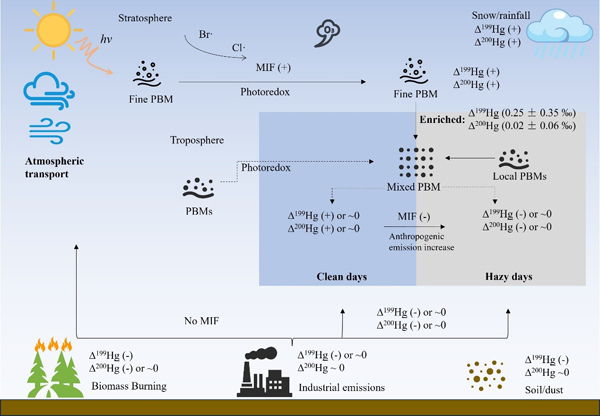
Figure: Mass-independent fractionation reveals the formation of atmospheric particulate-bound mercury (PBM). PBMs include both fine and coarse PBM. (Image by Prof. GUO Qingjun's team)
Reference:
Qin, X., Dong, X., Liu, C., Wei, R., Tao, Z., Zhang, H., & Guo, Q.* (2025). Mass-Independent Fractionation of Mercury Stable Isotopes Reveals Atmospheric Transport Impact on Particulate-Bound Mercury. Geophysical Research Letters, 52, e2025GL116080.
Download attachments:

Deep-sea fish teeth have attracted much attention because of their capacity to absorb rare earth element. Prof. GUO Qingjun's team at the Institute of Geographic Sciences and Natural Resources Research of Chinese Academy of Sciences found two distinctive REE adsorption events by fish teeth, resul...
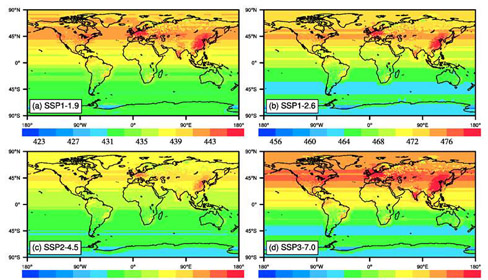
Increasing atmospheric carbon dioxide (CO2) concentrations by fossil fuel combustion is the main driver of global warming. Global CO2 retrieval products based on continuous satellite observations reveal nonuniform distributions of atmospheric CO2 concentrations.