Researchers Reveal the Unsustainability of Wetland Reclamation for Food Security
Wetland reclamation has long been regarded as a strategy to meet growing food demand, given the favorable soil and water conditions of wetlands. It has been estimated that wetland reclamation for upland croplands and rice cultivation accounts for nearly 80% of the total wetland loss. However, the agricultural benefits of wetland reclamation and its broader sustainability implications, particularly concerning flood regulation, remain poorly understood.
Prof. DONG Jinwei's team at the Institute of Geographic Sciences and Natural Resources Research, Chinese Academy of Sciences (IGSNRR, CAS), together with international collaborators, characterized global croplands reclaimed from wetlands (hereafter, wetland-reclaimed croplands) from 2000 to 2022 and evaluated their crop production performance and flood exposure risk. They found that global wetland reclamation yields limited agricultural gains while exposing reclaimed croplands to high flood risk. This work was published in Nature Sustainability.
The researchers reveal that agricultural gains from wetland reclamation are limited, characterized by no clear yield superiority and a marginal contribution to crop production. Nearly half of wetland-reclaimed croplands produced lower yields than existing croplands, especially when cultivated with upland crops. Globally, these wetland-reclaimed croplands accounted for only 0.1% of the total crop production, with their contribution remaining below 1% in 79% of subnational regions.
However, a substantial proportion of wetland-reclaimed croplands faced disproportionately high flood exposure risk. Globally, over half of wetland-reclaimed croplands (52%, 21,001 km2) were located in regions susceptible to significant flood hazards. Despite their limited extent, their average flood-exposure probability was 23 times higher than that of all croplands. Moreover, wetland reclamation has increasingly expanded into flood-prone areas, further exacerbating potential flood risks.
They further identifies widespread lose-lose outcomes, where limited agricultural gains coincided with high flood exposure. Approximately 60% of wetland-reclaimed croplands experienced these dual vulnerabilities, with hotspots concentrated in East and South Asia, North America, eastern South America, and Oceania. These trade-off hotspots were particularly prevalent in food-importing or low-income countries. China, the United States, and India collectively accounted for 34% of global trade-off hotspots.
The study provides the first global-scale evidence of the trade-offs between agricultural gains and ecological costs associated with wetland reclamation, underscoring the urgent need for effective interventions to ensure that agricultural expansion does not compromise critical wetland ecosystem services and long-term sustainability.
Reference:
Zhang X., Dong J.*, Shang Y. et al. Limited agricultural gains but high flood risk from global wetland reclamation. Nature Sustainability (2026). https://doi.org/10.1038/s41893-026-01965-x.
Download attachments:
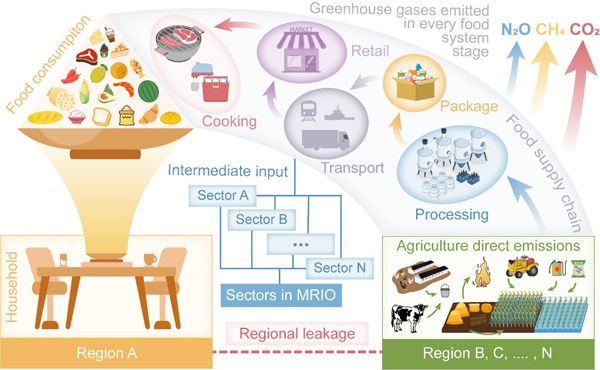
Prof. DENG Xiangzheng's team quantified China’s national and sub-national food greenhouse gas footprints from 2007 to 2017, revealing a decline in both national and provincial per capita footprints. Further studies showed that despite notable inequalities among households both between and within...
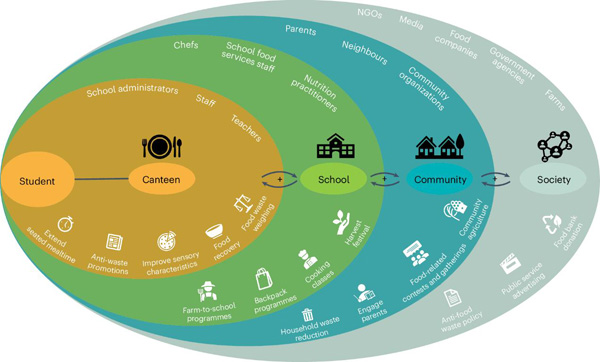
According to a new study published in NATURE FOOD, researchers led by Prof. LIU Xiaojie from the Institute of Geographic Sciences and Natural Resources Research of the Chinese Academy of Sciences (CAS) and Prof. YANG Yi from the College of Environment and Ecology of Chongqing University, proposed...