Reimagined SDG-Driven Pathways to Combat Desertification
Desertification threatens 24% of the world’s land area across 126 countries and affects 35% of the global population. However, mainstream global efforts to combat desertification prioritize short-term vegetation greening over addressing resource constraints and local livelihoods, posing hidden challenges to long-term Sustainable Development Goals (SDGs) attainment.
A new study published in the Proceedings of the National Academy of Sciences (PNAS), led by Prof. WANG Xunming, Prof. SUN Fubao, and Dr. GENG Xin from the Institute of Geographic Sciences and Natural Resources Research of the Chinese Academy of Sciences, proposes a SDG-driven strategy that links ecological restoration with climate-adaptive agriculture.
Using China as a representative case, the study demonstrates that converting marginal croplands into pasture and aligning crop choices with local environmental conditions can simultaneously increase regional vegetation cover by 0.2% to 0.6%, livestock production by 5.1% to 35.2%, and agricultural income by 20.5% to 22.2%, respectively, while reduce ecological water deficits by 0.1% to 3.7%. When evaluated through an SDG lens, the proposed strategies could help sustain an adequate protein supply for more than 70 million people, lift nearly 8 million people out of extreme poverty, and ease water scarcity for over 130 million people.
At the global scale, these benefits are estimated to contribute 0.7% to SDG 1 (No Poverty), 9.8% to SDG 2 (Zero Hunger), and 3.8% to SDG 6 (Clean Water and Sanitation), while also revealing important trade-offs across other development goals.
By integrating local environmental conditions with the global SDGs, the study offers policymakers, development agencies, and international conventions a practical roadmap for making desertification control more effective, inclusive, and resilient. The solutions are adaptable to the world’s most vulnerable dryland regions across Africa, the Middle East, Central Asia, and Latin America, underscoring how evidence-based land-use decisions can reinforce global efforts to combat desertification while enhancing livelihoods worldwide.
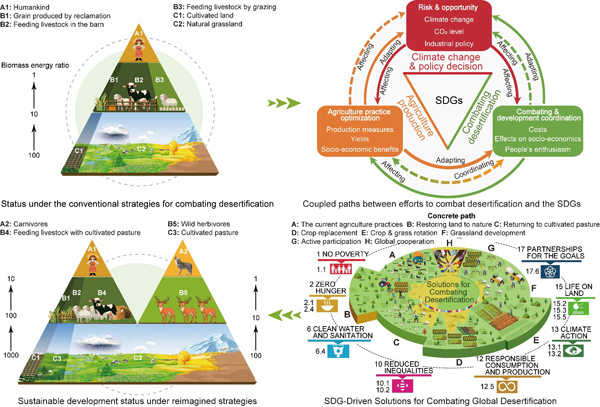
Figure: Conceptual framework illustrating SDG-oriented strategies for combating desertification. (Image by Prof. WANG Xunming’s group)
Download attachments:
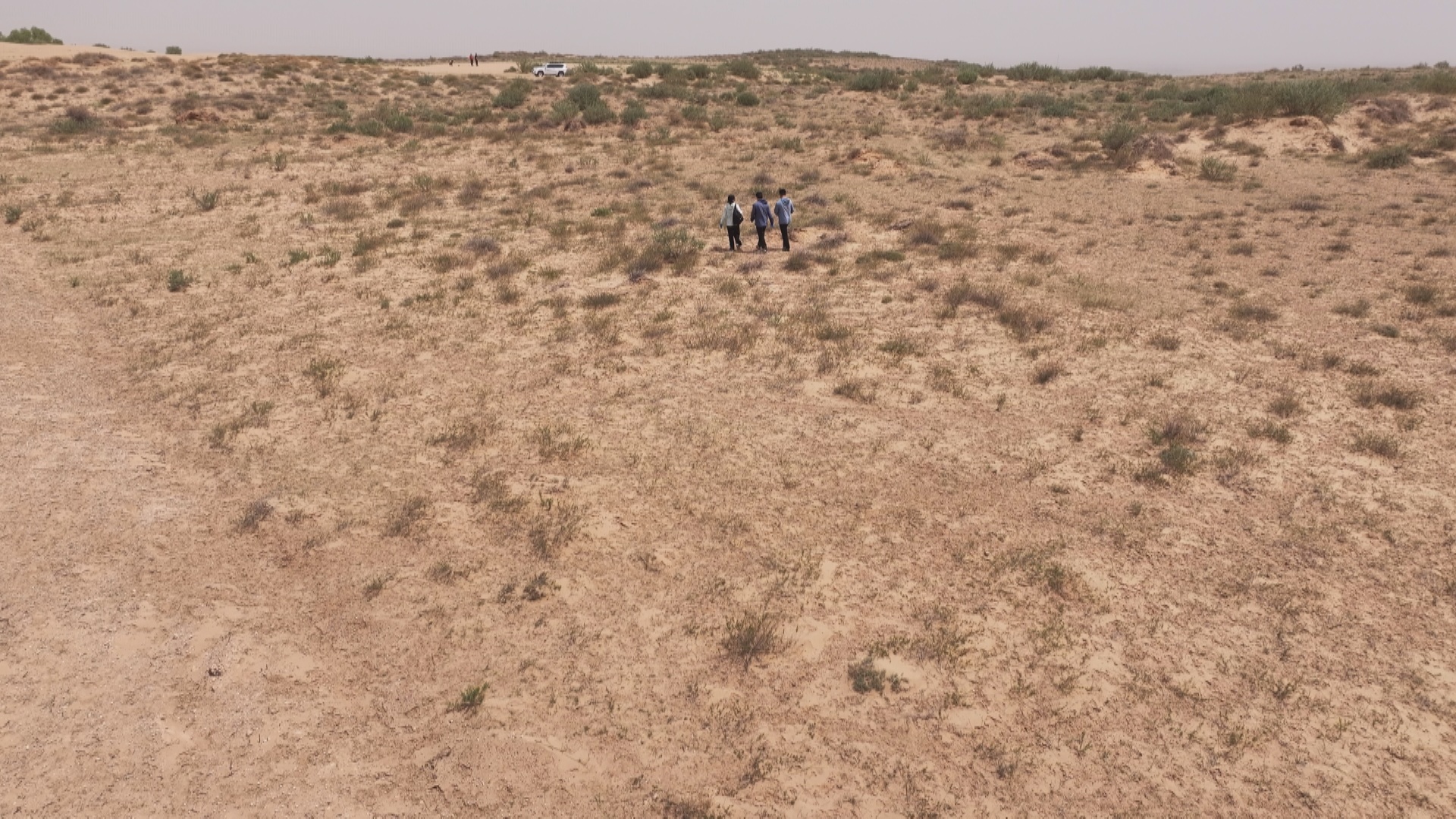
Chinese scientists have recently uncovered the distribution pattern of dryland biocrusts, often described as the "skin" of the soil or a "carpet" that stabilizes sand, according to the Northwest Institute of Eco-environment and Resources, and the Institute of Geographic Sciences and Natural Resou...
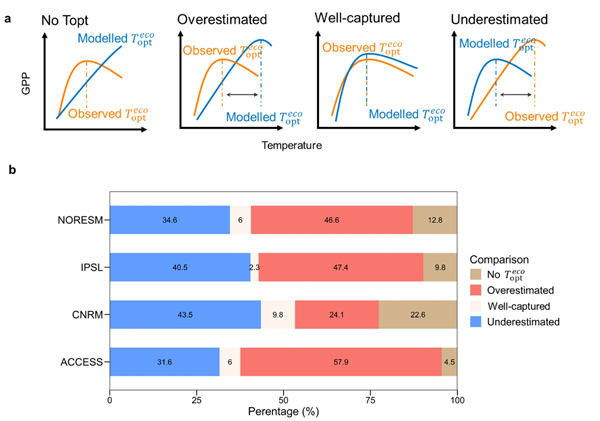
Land ecosystems absorb carbon from the atmosphere, slowing climate change. Yet, land carbon uptake is strongly influenced by temperature, and can decline rapidly once temperature exceeds an optimum level (Topt). This study shows that current Earth System Models (ESMs) overestimate the Topt and fa...